What YFC is Doing

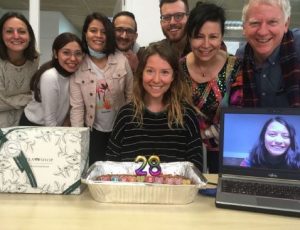
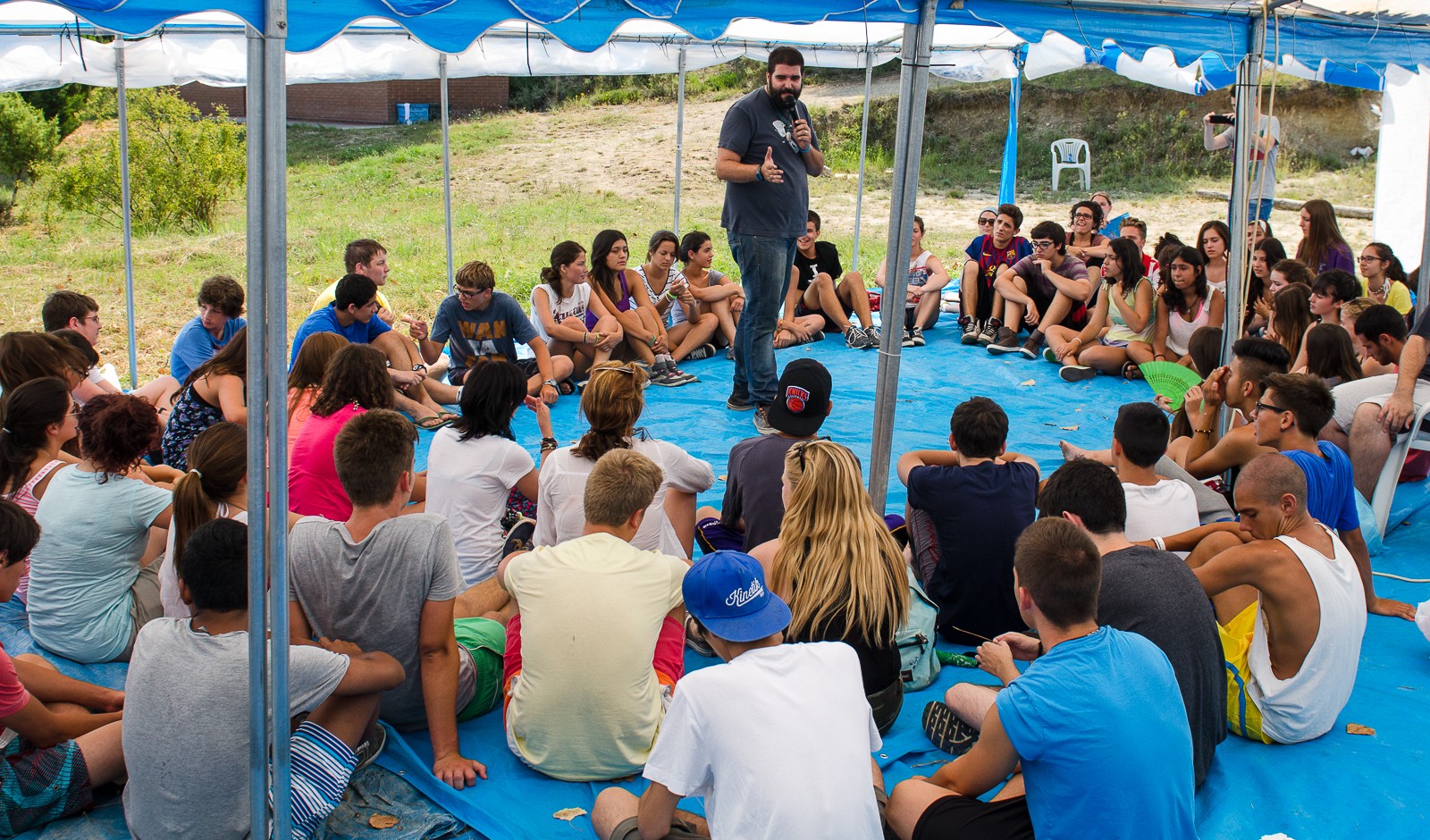
Spain YFC is ministering to their nation’s youth through camps; concerts; sports events; leadership training and publications.

Prayer Needs

  • Recruitment of staff and volunteers.
  • Leadership guidance and decision making.
  • Increased networking and relationship building with churches, individuals and organizations.
  • Increased ministries in the youth center and expansion of other direct ministries.

About Spain

Spain

Introduction

Spain's powerful world empire of the 16th and 17th centuries ultimately yielded command of the seas to England. Subsequent failure to embrace the mercantile and industrial revolutions caused the country to fall behind Britain, France, and Germany in economic and political power. Spain remained neutral in World Wars I and II but suffered through a devastating civil war (1936-39). A peaceful transition to democracy following the death of dictator Francisco FRANCO in 1975, and rapid economic modernization (Spain joined the EU in 1986) gave Spain a dynamic and rapidly growing economy and made it a global champion of freedom and human rights. The government continues to battle the Basque Fatherland and Liberty (ETA) terrorist organization, but its major focus for the immediate future will be on measures to reverse the severe economic recession that started in mid-2008.

Geography

Location

Location: Southwestern Europe, bordering the Bay of Biscay, Mediterranean Sea, North Atlantic Ocean, and Pyrenees Mountains, southwest of France
Geographic Coordinates: 40 00 N, 4 00 W

Area

Total Area: 505,370 sq km Rank: 51
Land Area: 498,980 sq km
Water Area: 6,390 sq km
Note: there are two autonomous cities - Ceuta and Melilla - and 17 autonomous communities including Balearic Islands and Canary Islands, and three small Spanish possessions off the coast of Morocco - Islas Chafarinas, Penon de Alhucemas, and Penon de Velez de la Gomera
Comparison: slightly more than twice the size of Oregon
Land Boundaries: 1,917.8 km
Bordering Countries: Andorra 63.7 km, France 623 km, Gibraltar 1.2 km, Portugal 1,214 km, Morocco (Ceuta) 6.3 km, Morocco (Melilla) 9.6 km
Coastline: 4,964 km

Climate

temperate; clear, hot summers in interior, more moderate and cloudy along coast; cloudy, cold winters in interior, partly cloudy and cool along coast

Terrain

large, flat to dissected plateau surrounded by rugged hills; Pyrenees in north

Elevations

Lowest Point: Atlantic Ocean 0 m
Highest Point: Pico de Teide (Tenerife) on Canary Islands 3,718 m

Natural Resources

coal, lignite, iron ore, copper, lead, zinc, uranium, tungsten, mercury, pyrites, magnesite, fluorspar, gypsum, sepiolite, kaolin, potash, hydropower, arable land

Land Use

Arable land: 27.18%
Permanent Crops: 9.85%
Other: 62.97% (2005)
Irrigated Land: 37,800 sq km (2003)
Renewable Water Resources: 111.1 cu km (2005)
Total Freshwater withdrawal (domestic/industrial/agricultural): 37.22 cu km/yr (13%/19%/68%)
Freshwater Withdrawal Per Capita: 864 cu m/yr (2002)

Environment

Natural Hazards: periodic droughts, occasional flooding
Environmental Issues: pollution of the Mediterranean Sea from raw sewage and effluents from the offshore production of oil and gas; water quality and quantity nationwide; air pollution; deforestation; desertification
Environmental Agreements: Party to: Air Pollution, Air Pollution-Nitrogen Oxides, Air Pollution-Sulfur 94, Air Pollution-Volatile Organic Compounds, Antarctic-Environmental Protocol, Antarctic-Marine Living Resources, Antarctic Treaty, Biodiversity, Climate Change, Climate Change-Kyoto Protocol, Desertification, Endangered Species, Environmental Modification, Hazardous Wastes, Law of the Sea, Marine Dumping, Marine Life Conservation, Ozone Layer Protection, Ship Pollution, Tropical Timber 83, Tropical Timber 94, Wetlands, Whaling

Geography Notes

strategic location along approaches to Strait of Gibraltar; Spain controls a number of territories in northern Morocco including the enclaves of Ceuta and Melilla, and the islands of Penon de Velez de la Gomera, Penon de Alhucemas, and Islas Chafarinas

People

Population: 40,525,002 (July 2010 est.) Rank: 32

Age Structure

0-14 years: 14.5% (male 3,021,822/female 2,842,597)
15-64 years: 67.4% (male 13,705,107/female 13,601,399)
65 years and over: 18.1% (male 3,071,394/female 4,282,683) (2010 est.)
Median Age: 38.9 years

Population Growth

Growth Rate: 0.072% (2010 est.) Rank: 193
Birth Rate: 9.72 births/1,000 population (2010 est.) Rank: 198
Death Rate: 9.99 deaths/1,000 population (July 2010 est.) Rank: 64
Net Migration Rate: 0.99 migrant(s)/1,000 population (2010 est.) Rank: 55

Urbanization

Urban Population: 77% of total population (2008)
Rate of Urbanization: 0.9% annual rate of change (2005-10 est.)

Life and Death

Infant Mortality Rate: 4.21 deaths/1,000 live births Rank: 208
Life Expectancy at Birth: 80.05 years Rank: 21
Fertility Rate: 1.32 children born/woman (2010 est.) Rank: 207

Health and Disease

HIV/AIDS - Adult Prevalence Rate: 0.5% (2007 est.) Rank: 75
People living with HIV/AIDS: 140,000 (2007 est.) Rank: 39
HIV/AIDS Deaths: 2,300 (2007 est.) Rank: 58

Nationality and Culture

Noun: Spaniard(s)
Adjective: Spanish
Ethnic Groups: composite of Mediterranean and Nordic types
Religion: Roman Catholic 94%, other 6%
Languages: Castilian Spanish (official) 74%, Catalan 17%, Galician 7%, Basque 2%, are official regionally

Education

Literacy (Meaning, age 15 and over can read and write): 97.9% Male: 98.7% Female: 97.2% (2003 est.)
School life expectancy (primary to tertiary education): 16 years Male: 16 years Female: 17 years (2006)
Education expenditures: 4.2% of GDP (2005) Rank: 100

Government

Country Name

Conventional Long Form: Kingdom of Spain
Conventional Short Form: Spain
Local Long Form: Reino de Espana
Local Short Form: Espana
Government Type: parliamentary monarchy
Capital: Madrid Geographic Coordinates: 40 24 N, 3 41 W

Administrative Divisions

17 autonomous communities (comunidades autonomas, singular - comunidad autonoma) and 2 autonomous cities* (ciudades autonomas, singular - ciudad autonoma); Andalucia, Aragon, Asturias, Baleares (Balearic Islands), Ceuta*, Canarias (Canary Islands), Cantabria, Castilla-La Mancha, Castilla y Leon, Cataluna (Catalonia), Comunidad Valenciana (Valencian Community), Extremadura, Galicia, La Rioja, Madrid, Melilla*, Murcia, Navarra, Pais Vasco (Basque Country)
Note: the autonomous cities of Ceuta and Melilla plus three small islands of Islas Chafarinas, Penon de Alhucemas, and Penon de Velez de la Gomera, administered directly by the Spanish central government, are all along the coast of Morocco and are collectively referred to as Places of Sovereignty (Plazas de Soberania)
Independence: 1492; the Iberian peninsula was characterized by a variety of independent kingdoms prior to the Muslim occupation that began in the early 8th century A.D. and lasted nearly seven centuries; the small Christian redoubts of the north began the reconquest almost immediately, culminating in the seizure of Granada in 1492; this event completed the unification of several kingdoms and is traditionally considered the forging of present-day Spain
National holiday: National Day, 12 October (1492); year when Columbus first set foot in the Americas
Constitution: approved by legislature 31 October 1978; passed by referendum 6 December 1978; signed by the king 27 December 1978
Legal system: civil law system with regional applications; accepts compulsory ICJ jurisdiction with reservations
Suffrage: 18 years of age; universal

Executive Branch

Chief of State: King JUAN CARLOS I (since 22 November 1975); Heir Apparent Prince FELIPE, son of the monarch, born 30 January 1968
Head of Government: President of the Government (Prime Minister equivalent) Jose Luis Rodriguez ZAPATERO (since 17 April 2004); First Vice President (and Minister of the Presidency) Maria Teresa FERNANDEZ DE LA VEGA Sanz (since 18 April 2004), Second Vice President (and Minister of Economy and Finance) Elena SALGADO Mendez (since 8 April 2009), and Third Vice President (and Minister of Regional Affairs) Manuel CHAVES Gonzalez (since 8 April 2009)
Cabinet: there is also a Council of State that is the supreme consultative organ of the government, but its recommendations are non-binding
Note: Council of Ministers designated by the president
Elections: the monarchy is hereditary; following legislative elections, the leader of the majority party or the leader of the majority coalition usually proposed president by the monarch and elected by the National Assembly; election last held on 9 and 11 April 2008 (next to be held in March 2012); vice presidents appointed by the monarch on the proposal of the president
Election Results: Jose Luis Rodriguez ZAPATERO reelected President of the Government; percent of National Assembly vote - 46.9%

Legislative Branch

bicameral; General Courts or Las Cortes Generales (National Assembly) consists of the Senate or Senado (264 seats as of 2008; 208 members directly elected by popular vote and the other 56 - as of 2008 - appointed by the regional legislatures; members to serve four-year terms) and the Congress of Deputies or Congreso de los Diputados (350 seats; each of the 50 electoral provinces fills a minimum of two seats and the North African enclaves of Ceuta and Melilla fill one seat each with members serving a four-year term; the other 248 members are determined by proportional representation based on popular vote on block lists who serve four-year terms)
Elections: Senate - last held on 9 March 2008 (next to be held by March 2012); Congress of Deputies - last held on 9 March 2008 (next to be held by March 2012)
Election Results: Senate - percent of vote by party - NA; seats by party - PP 101, PSOE 88, Entesa Catalona de Progress 12, CiU 4, PNV 2, CC 1, members appointed by regional legislatures 56; Congress of Deputies - percent of vote by party - PSOE 43.6%, PP 40.1%, CiU 3.1%, PNV 1.2%, ERC 1.2%, other 10.8%; seats by party - PSOE 169, PP 154, CiU 10, PNV 6, ERC 3, other 8; note - seats by party in the Congress of Deputies as of 15 December 2009 - PSOE 169, PP 153, CiU 10, PNV 6, ERC 3, other 9

Judicial branch

Supreme Court or Tribunal Supremo

Politics

Political Parties and Leaders: Basque Nationalist Party or PNV or EAJ [Inigo URKULLU Renteria]; Canarian Coalition or CC [Claudina MORALES Rodriquez] (a coalition of five parties); Convergence and Union or CiU [Artur MAS i Gavarro] (a coalition of the Democratic Convergence of Catalonia or CDC [Artur MAS i Gavarro] and the Democratic Union of Catalonia or UDC [Josep Antoni DURAN i LLEIDA]); Entesa Catalonia de Progress (a Senate coalition grouping four Catalan parties - PSC, ERC, ICV, EUA); Galician Nationalist Bloc or BNG [Guillerme VAZQUEZ Vazquez]; Initiative for Catalonia Greens or ICV [Joan SAURA i Laporta]; Navarra Yes or NaBai [collective leadership] (a coalition of four Navarran parties); Popular Party or PP [Mariano RAJOY Brey]; Republican Left of Catalonia or ERC [Joan PUIGCERCOS i Boixassa]; Spanish Socialist Workers Party or PSOE [Jose Luis Rodriguez ZAPATERO]; Union of People of Navarra or UPN [Yolanda BARCINA Angulo]; Union, Progress and Democracy or UPyD [Rosa DIEZ Gonzalez]; United Left or IU [Cayo LARA Moya] (a coalition of parties including the Communist Party of Spain or PCE and other small parties)
Political pressure groups and leaders: Association for Victims of Terrorism or AVT (grassroots organization devoted primarily to opposing ETA terrorist attacks and supporting its victims); Basta Ya (Spanish for "Enough is Enough"); grassroots organization devoted primarily to opposing ETA terrorist attacks and supporting its victims); Nunca Mais (Galician for "Never Again"; formed in response to the oil Tanker Prestige oil spill); Socialist General Union of Workers or UGT and the smaller independent Workers Syndical Union or USO; Trade Union Confederation of Workers' Commissions or CC.OO.
Other: business and landowning interests; Catholic Church; free labor unions (authorized in April 1977); university students
International Organization Participation: ADB (nonregional member), AfDB (nonregional member), Arctic Council (observer), Australia Group, BCIE, BIS, CE, CERN, EAPC, EBRD, EIB, EMU, ESA, EU, FAO, FATF, IADB, IAEA, IBRD, ICAO, ICC, ICCt, ICRM, IDA, IEA, IFAD, IFC, IFRCS, IHO, ILO, IMF, IMO, IMSO, Interpol, IOC, IOM, IPU, ISO, ITSO, ITU, ITUC, LAIA (observer), MIGA, MONUC, NATO, NEA, NSG, OAS (observer), OECD, OPCW, OSCE, Paris Club, PCA, Schengen Convention, SECI (observer), SICA (observer), UN, UNCTAD, UNESCO, UNHCR, UNIDO, UNIFIL, Union Latina, UNRWA, UNWTO, UPU, WCO, WFTU, WHO, WIPO, WMO, WTO, ZC
Flag Description: three horizontal bands of red (top), yellow (double width), and red with the national coat of arms on the hoist side of the yellow band; the coat of arms is quartered to display the emblems of the traditional kingdoms of Spain (clockwise from upper left, Castile, Leon, Navarre, and Aragon) while Granada is represented by the stylized pomegranate at the bottom of the shield; the arms are framed by two columns representing the Pillars of Hercules, which are the two promontories (Gibraltar and Ceuta) on either side of the eastern end of the Strait of Gibraltar; the red scroll across the two columns bears the imperial motto of "Plus Ultra" (further beyond) referring to Spanish lands beyond Europe; the triband arrangement with the center stripe twice the width of the outer dates to the 18th century
Note: the red and yellow colors are related to those of the oldest Spanish kingdoms: Aragon, Castile, Leon, and Navarre

Economy

Economy Overview: Spain's mixed capitalist economy is the 12th largest in the world, and its per capita income roughly matches that of Germany and France. However, after almost 15 years of above average GDP growth, the Spanish economy began to slow in late 2007 and entered into a recession in the second quarter of 2008. Spain's unemployment rate rose from a low of about 8% in 2007 to more than 19% in December 2009 and continues to rise. Its fiscal deficit worsened from 3.8% of GDP in 2008 to about 7.9% of GDP in 2009, more than double the EMU limit. GDP contracted by 3.6% from 2008, ending a 16-year growth trend. The economy is projected to resume modest growth sometime in 2010, making Spain the last major economy to emerge from the global recession. The reversal in Spain's economic growth reflects a significant decline in the construction sector, an oversupply of housing, falling consumer spending, and slumping exports. Government efforts to boost the economy through stimulus spending, extended unemployment benefits, and loan guarantees have not prevented a sharp rise in the unemployment rate, which was the highest in the EU in 2009. Spain's banking sector has been relatively insulated from the global financial crisis, due in part to conservative oversight by the Bank of Spain. Government intervention to rescue banks on the scale seen elsewhere in Europe in 2008 and 2009 was not necessary in Spain, although Spanish banks' high exposure to the collapsed domestic construction and real estate market poses continued risks for the sector. The government intervened in one regional savings bank in 2009, and others have merged out of necessity.

Gross Domestic Product

GDP (purchasing power parity): $1.362 trillion (2009 est.) Rank: 14
GDP - real growth rate: -3.6% (2009 est.) Rank: 175
GDP - per capita (PPP): $33,600 (2009 est.) Rank: 38
GDP - Composition by Sector: Agriculture: 3.3% Industry: 26.8% Services: 70% (2009 est.)

Labor Force

Labor Force: 23.04 million (2009 est.) Rank: 27
Labor force - by occupation: Agriculture: 4.2% Industry: 24% Services: 71.7% (2009 est.)
Unemployment Rate: 18% (2009 est.) Rank: 161

Poverty

Population below poverty line: 19.8% (2005)

Transnational Issues

International Disputes: in 2002, Gibraltar residents voted overwhelmingly by referendum to reject any "shared sovereignty" arrangement; the government of Gibraltar insists on equal participation in talks between the UK and Spain; Spain disapproves of UK plans to grant Gibraltar greater autonomy; Morocco protests Spain's control over the coastal enclaves of Ceuta, Melilla, and the islands of Penon de Velez de la Gomera, Penon de Alhucemas, and Islas Chafarinas, and surrounding waters; both countries claim Isla Perejil (Leila Island); Morocco serves as the primary launching site of illegal migration into Spain from North Africa; Portugal does not recognize Spanish sovereignty over the territory of Olivenza based on a difference of interpretation of the 1815 Congress of Vienna and the 1801 Treaty of Badajoz

Want to know more? Show Full Profile